

Salmon equipped with high-tech gear could provide insight into fish mysteries
6/27/06 Print
PrintHalifax, Canada
They could be the most technologically sophisticated fish in the sea.Outfitted with tiny data-gathering gizmos, an array of species will cruise the world's oceans collecting information and providing researchers with a detailed picture of the international marine environment, say the Canadian scientists in charge of the project.
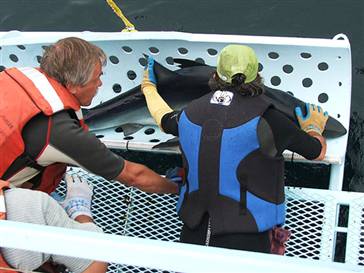
The researchers, based at Dalhousie University in Halifax, are planning to strap small electronic tags onto a range of species that will gather data on water temperature, salinity, light conditions and the animals' migratory routes.
"We need that kind of detailed information that's really never been possible before," said Ron O'Dor, the project's lead researcher.
"We're now going to have a single system which will monitor the ocean and the animals that live in the ocean so we start to get a picture of changes in the climate and changes in the behaviour of animals."
The devices, provided by Canadian companies, vary in size from an almond to an AA battery and can be surgically implanted or fastened to a fin.
The scientists also plan to arrange a network of acoustic receivers on the ocean floor. These devices, each the size of a Thermos, will collect information as the tagged fish swim by.
O'Dor said the project should fill in some of the knowledge gaps surrounding how climate change is affecting marine species and how far and wide fish travel.
"Today, we know less about our marine life - how these animals live, where they go - than we know about the backside of the moon," said O'Dor, a senior scientist with the Census of Marine Life.
O'Dor and his colleagues will unveil their plans for the Ocean Tracking Network during a meeting Tuesday at Dalhousie. Three dozen scientists and government officials from around the world will be involved in the project.
They will determine what animals will be tagged - including everything from salmon to whales - and where the acoustic monitors will be placed.
Meanwhile, the group plans to ask the Canadian Foundation for Innovation for $35 million to pay for the initial purchase of the hardware.
O'Dor estimates it will cost about $160 million over five years to maintain the project.
Mike Stokesbury, another Dalhousie researcher, said the information gathered could be invaluable to conservation efforts. Fisheries officials, for example, could use the devices to track whales and then set shipping routes.
The acoustic receivers could also be used to collect information in the event of a tsunami.
"We view this as becoming a key element in the global ocean observing system that has many, many different purposes and uses," said O'Dor.
One program on the West Coast has already helped researchers track the movement of young wild salmon.
Pacific Ocean Shelf Tracking, based in British Columbia, has monitors set up from Oregon to the Alaskan panhandle.
By The Canadian Press